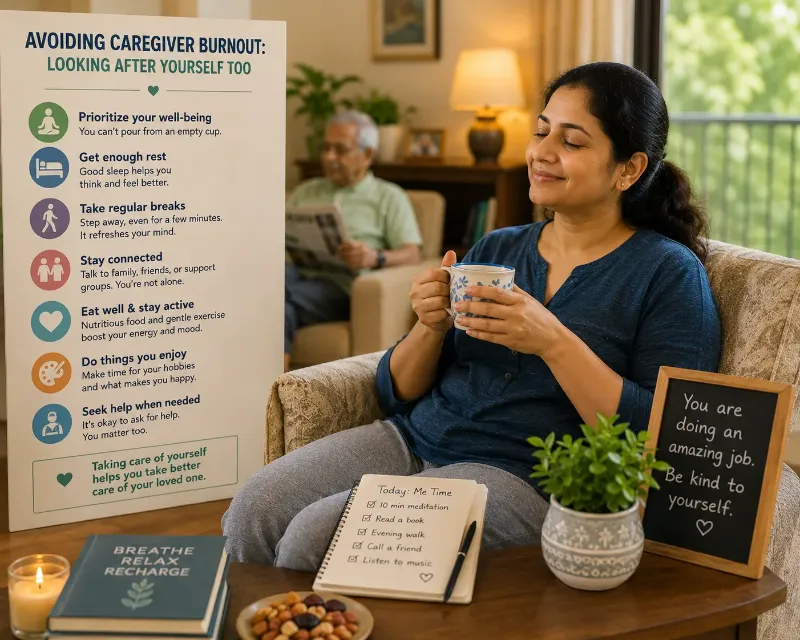
In most Indian families, caregiving doesn't begin with a decision — it accretes. Someone has to take the parent to dialysis three times a week, so one sibling starts doing it. Someone needs to be home when the nurse comes, so another sibling shifts to working from home. Someone becomes the point of contact for every medical decision. Over months, quietly, one person's life contracts around the care.
Burnout doesn't announce itself. It arrives as irritability that seems disproportionate to its triggers. As exhaustion that sleep doesn't fix. As going through the motions. And eventually — almost always — as resentment toward the person you're caring for, followed immediately by guilt about the resentment.
The signs of caregiver burnout overlap significantly with depression: persistent fatigue that doesn't resolve with rest; loss of interest in things you used to enjoy; feeling trapped or hopeless about the future; physical symptoms like frequent illness, headaches, and a lowered immune system; increasing impatience or anger, especially directed at the person in your care.
If several of these feel familiar, that is not weakness. It is information. It is your body telling you that the current arrangement is not sustainable.
In families where one sibling carries the majority of the caregiving burden, the problem is rarely that the others don't care. It's usually that no one has had a direct, specific conversation about the division of responsibility — so the distribution has happened by default, which almost always means it has happened unfairly.
Tasks can be divided in ways that suit different people's situations and geographies. The sibling who lives nearby handles medical appointments and daily check-ins. The sibling who lives far away covers a larger share of professional care costs. The sibling who is good at paperwork handles insurance claims and pharmacy orders. The goal is equity of effort, not equality of task.
This conversation is uncomfortable. It is also almost always better than the alternative, which is years of unspoken resentment.
Bringing in a trained caregiver — even for a few hours a day — creates breathing room that changes everything. The primary family caregiver can sleep uninterrupted. Can keep their own doctor's appointment. Can see a friend. Can sit in a room alone for an hour.
This is not a luxury. It is what makes long-term caregiving sustainable. A primary caregiver who is running on empty, who has not had a full night's sleep in months, who has abandoned their own health — that person is not providing good care. They are providing survival-level care, and they are heading toward a crisis of their own.
"My parents sacrificed everything for me." This is a real feeling, not one to be dismissed or argued away. But when it becomes a reason to accept a level of self-neglect that serves nobody, it stops being duty and starts being harm — harm to yourself, and indirectly to the person you're caring for.
You cannot pour from an empty vessel. Taking care of yourself is not a betrayal of the person who needs you. It is a prerequisite for continuing to show up for them.
Signs it's time to bring in professional support: You are sleeping fewer than five hours regularly. You have stopped attending your own medical appointments. You feel you cannot leave the house. You find yourself losing your temper in ways that frightened you. You no longer remember when you last did something you enjoyed.
HomeCarePro provides daily support caregivers, shift attendants and respite care across Gurgaon — so family members can breathe. Talk to our care team →
Our team is ready to help your family — a free callback is just one tap away.